
Employee Engagement is Not a Yearly Survey
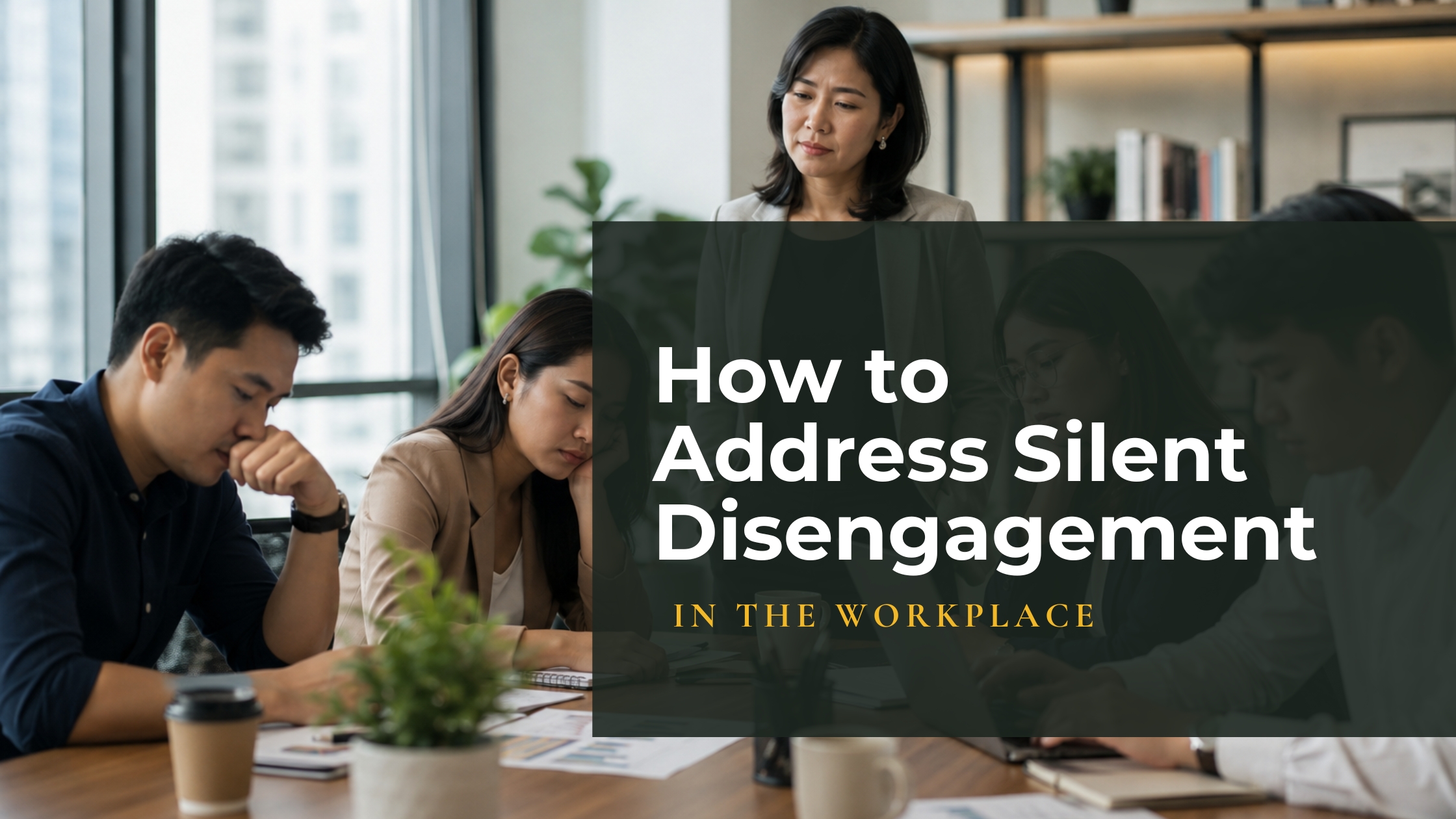
A manager walks into a Monday morning meeting.
Everyone is there. Cameras are on. Reports are submitted. The team nods at the right moments. No one complains. No one argues. No one raises a concern.
On paper, the team looks fine.
But the manager senses something has changed.
The once-curious employee now answers with the bare minimum. The dependable team member no longer volunteers ideas. The group still meets deadlines, but the energy feels flat. People are present, but not fully there.
This is where many organizations miss the warning sign.
They assume silence means alignment. They assume compliance means commitment. They assume attendance means trust.
But in many Philippine workplaces, silence can mean something else.
It can mean employees have learned that speaking up is risky. It can mean people do not want to be labeled reklamador, emotional, negative, or not a team player. It can mean they have stopped trying to influence the culture because they no longer believe their voice will matter.
This is the hidden cost of quiet disengagement.
And for companies that want to keep top-performing people, this is no longer a small HR concern. It is a growth concern.
When a company becomes unattractive for excellent people to stay in, the problem rarely starts with resignation letters. It starts earlier. It starts when people still show up physically, but mentally and emotionally begin to leave.
Global workplace data shows the depth of the issue. Gallup’s State of the Global Workplace 2026 report found that only 20% of employees worldwide were engaged in 2025, with disengagement costing the world economy an estimated $10 trillion in lost productivity. This should make every corporate leader pause.
Because when employees disconnect, the business does not only lose energy. It loses ideas, speed, ownership, trust, and future leaders.
In the Philippines, this becomes even more sensitive. Many employees are raised to value pakikisama, respect for authority, and emotional restraint at work. These values can create harmony. But when misunderstood by leaders, they can also hide frustration, burnout, and quiet withdrawal.
This is why employee engagement should not be treated as a yearly survey score. It should be treated as a daily leadership responsibility.
The Problem With “At Least They’re Still Working”
One of the most dangerous phrases inside a company is this:
“At least the work is getting done.”
It sounds practical. It may even sound fair.
But it can also hide a deeper problem.
A team can still produce output while trust is declining. Employees can still finish tasks while silently updating their resumes. Managers can still hit targets while their people feel unseen, exhausted, or emotionally unsafe.
In the Philippine corporate setting, this often shows up quietly:
- Employees stop suggesting improvements.
- Meetings become reporting sessions, not real discussions.
- Managers hear “okay lang” even when things are not okay.
- High performers become more guarded.
- People avoid conflict, but resentment grows.
- HR becomes the last to know what employees have been carrying for months.
This is not always laziness. It is not always lack of discipline. It is often a signal that people no longer feel connected to the organization’s direction, leadership, or care.
Silent disengagement is difficult because it does not always disturb the room.
It simply lowers the quality of the room.
Why This Matters More in 2026
The workplace has changed.
Employees today are not only asking, “How much will I earn?”
They are also asking:
“Will I grow here?”
“Will I be respected here?”
“Will my manager listen?”
“Will this company support my life, not just use my skills?”
“Can I succeed here without losing myself?”
This shift is visible in the Philippine hiring market. Robert Walters Philippines reported that candidates have become more cautious and risk-aware, with motivations shifting from simply chasing the highest salary to prioritizing stability, job security, career progression, and flexibility.
That means companies cannot rely on salary alone. Compensation still matters. It always will. But people now evaluate the full experience of work.
Sprout PH’s 2026 workplace wellness report also highlights this shift. It reported that 87% of employees consider wellness programs when evaluating job offers, and 80% believe these programs improve their wellbeing.
This is important for HR leaders and business owners.
The old assumption was that wellbeing was a “nice-to-have.” Something extra. Something for posters, webinars, or wellness month.
That mindset is becoming outdated.
Today, wellbeing affects retention, productivity, reputation, and the company’s ability to attract strong talent.
If employees feel their dignity is protected, their workload is human, their voice is heard, and their contribution matters, they are more likely to stay.
Not because they are trapped.
But because they choose to.
The Filipino Workplace Taboo: Rewarding Silence as Professionalism
Many organizations say they want honest feedback.
But their culture teaches people otherwise.
An employee who raises a concern may be seen as difficult. A manager who admits struggle may be seen as weak. A team member who asks for boundaries may be seen as lacking commitment.
So people adjust.
They smile. They say yes. They avoid raising issues. They keep the peace.
Then one day, leadership is surprised when a valued employee resigns.
This is one of the quiet taboos in many Philippine workplaces: silence is often rewarded as professionalism.
But silence is not always maturity.
Sometimes, silence means fear.
Sometimes, silence means fatigue.
Sometimes, silence means employees have already decided that the company is not a safe place to be fully honest.
This is why employee disengagement Philippines should not be discussed only as a productivity issue. It is also a cultural issue. It sits inside how leaders respond to honesty, disagreement, mistakes, and emotional strain.
A company that punishes truth will eventually lose access to truth.
And once leaders lose access to truth, they also lose the ability to lead accurately.
What Quiet Disengagement Looks Like
Quiet disengagement does not always look dramatic.
It can look like a team member who used to be proactive but now waits for instructions.
It can look like a manager who attends leadership meetings but no longer believes change is possible.
It can look like employees who participate in team building activities but return to the office with the same unresolved tension.
It can look like people doing enough to avoid being noticed.
Here are common signs leaders should watch:
| Sign | What It May Really Mean |
|---|---|
| Employees rarely speak during meetings | They may not feel safe, invited, or heard |
| People comply but do not take ownership | They may not feel connected to the purpose |
| High performers stop volunteering | They may feel overused or unrecognized |
| Feedback becomes shallow | Employees may believe honesty has consequences |
| Managers avoid hard conversations | They may lack tools, confidence, or emotional support |
| Turnover comes as a surprise | The warning signs were present but not named |
The issue is not always that employees do not care.
Sometimes, they cared for a long time. They just got tired of caring alone.
What Employees Need to Choose to Stay
Retention is not only about preventing people from leaving.
It is about creating a workplace worth staying in.
And often, the essentials are not complicated.
People want dignity. They want to be treated like adults. They want leaders who communicate clearly. They want fair expectations. They want to know that good work will not simply lead to more invisible labor. They want room to grow. They want to feel that their humanity is not an inconvenience to the company.
This is why workplace culture Philippines needs a more grounded conversation.
Filipino employees do not need companies to become soft. They need companies to become honest, consistent, and human.
Care does not remove accountability. It strengthens it.
When people feel respected, they are more willing to receive correction. When they feel seen, they are more willing to contribute. When they feel psychologically safer, they are more willing to speak before issues become expensive.
This is how companies begin to protect both people and performance.
Previous Retention Strategies vs. What Works Now
Many companies are still using retention strategies that worked in a different season.
Some still assume that employees will stay because the company is stable, the salary is decent, or the brand is known. Those factors help. But they are no longer enough.
Here is the shift leaders need to understand:
| Previous Retention Strategy | Current Workplace Reality |
|---|---|
| Annual salary increases as the main retention tool | Pay matters, but employees also look for growth, stability, flexibility, and care |
| Team building once or twice a year | Teams need regular trust-building, honest conversations, and alignment |
| Open-door policy | Employees need leaders who actively invite truth, not just say the door is open |
| Free snacks, events, and perks | Perks cannot replace healthy workload, dignity, and manager support |
| Performance reviews once a year | People need ongoing feedback, clarity, and coaching |
| “We are family” messaging | Employees now look for boundaries, fairness, and respect |
| HR handles people concerns alone | Leaders and managers must own culture every day |
| Training focused only on skills | People also need identity, purpose, communication, and emotional maturity |
The companies that will win talent in this season are not the ones with the loudest culture statements.
They are the ones whose daily practices make people feel safe enough to stay engaged.
How to Address Silent Disengagement in the Workplace
The good news is that reconnecting employees is possible.
It does not always require a massive transformation project right away. Often, it begins with a few honest shifts.
1. Stop assuming silence means agreement
Leaders need to become more careful with silence.
When a room is quiet, ask better questions.
Instead of asking, “Any concerns?” try:
“What might we be missing?”
“What part of this plan may be difficult for the team?”
“What support would make this more realistic?”
“What are people saying quietly that we need to hear respectfully?”
These questions give employees permission to be thoughtful, not rebellious.
2. Train managers to notice emotional withdrawal
Many managers are trained to monitor output. Fewer are trained to notice energy, trust, and motivation.
But managers are often the first line of culture.
They need to notice when a usually engaged person becomes distant, when a team stops contributing ideas, or when employees become overly careful with their words.
The goal is not to diagnose people. The goal is to lead with awareness.
A simple check-in can sound like:
“I noticed you have been quieter than usual. I do not want to assume anything, but I want to check how work has been feeling for you lately.”
That one sentence can open a door.
3. Reset HR priorities around retention and wellbeing
HR should not only be pulled in when something is already broken.
If the company wants people to stay, HR priorities must include listening systems, manager development, workload reviews, career pathways, and employee wellbeing.
This does not mean HR should carry everything.
It means HR should help design the structure that allows leaders to care consistently.
For example:
- Track turnover patterns by department.
- Review why high performers leave.
- Check whether managers are equipped to coach.
- Study workload, not just attendance.
- Ask employees what makes work harder than it needs to be.
- Build wellbeing into leadership routines, not just events.
This is where employee engagement becomes more practical. It stops being a vague HR word and becomes a way to measure whether people still feel connected, supported, and willing to contribute.
4. Give employees dignity in difficult conversations
People can handle correction better when they are not shamed.
They can handle change better when they are not blindsided.
They can handle pressure better when leaders communicate clearly and respectfully.
Dignity sounds simple, but it is powerful.
It means no public humiliation. No vague criticism. No favoritism. No emotional manipulation. No using “malasakit” to justify unpaid overextension.
Dignity tells employees:
“You matter here, even when we need to correct, adjust, or improve.”
That kind of workplace does not weaken performance. It protects it.
5. Create real pathways for growth
One reason people disconnect is because they no longer see a future in the company.
They may still like their work. They may even respect the organization. But if they cannot see growth, they begin to emotionally detach.
Growth does not always mean promotion right away.
It can mean:
- clearer role expectations
- stretch assignments
- mentoring
- skills development
- leadership preparation
- cross-functional exposure
- coaching conversations
- recognition of core strengths
Employees stay longer when they can see that the company is not only using what they can do now, but also investing in who they can become.
6. Make care measurable
Care should be felt, but it should also be designed.
A company can ask:
- Are people taking healthy breaks?
- Are managers having regular one-on-one conversations?
- Are employees clear about priorities?
- Are workloads sustainable?
- Are people safe to raise concerns?
- Are values reflected in daily leadership behavior?
- Are high performers being protected from silent overload?
Care becomes credible when it shows up in systems.
Without systems, care becomes dependent on personality. Some managers will practice it. Others will not.
That is why culture must be intentional.
Do Not Be Afraid to Try a New Approach
Many companies repeat the same people strategies because they feel familiar.
Another seminar. Another memo. Another team building activity. Another values campaign. Another reminder to be positive.
Some of these may help.
But if the root issue is misalignment, emotional disconnection, unclear identity, poor communication, or lack of trust, surface-level activities will not be enough.
This is where organizations need to be brave enough to try deeper work.
Not weird work. Not fluffy work. Not forced vulnerability.
Deeper work simply means asking better questions:
Who are our people becoming inside this organization?
Do our leaders know how to bring out the best in different personalities?
Are our people clear about their strengths, pain points, and purpose?
Does our culture help people grow, or does it quietly drain them?
Are we developing people only for performance, or also for maturity?
The future of workplace culture Philippines will require companies to move beyond compliance and into conscious people development.
This is not about making work emotional.
It is about making work human enough for people to keep giving their best.
Why Greatfull Consultancy Can Help
At Greatfull Consultancy, we believe that disengagement, demotivation, internal conflict, and mental overload are not only performance issues. They are often alignment issues.
This is why our work begins from within.
At the heart of Greatfull Consultancy is Core Cognition Transformation, or CCT™, our proprietary framework designed to unlock each individual’s Core Gifts and align identity with performance.
CCT™ helps individuals understand what drives them, what shaped them, what strengthens them, and what gives their work meaning. Through this process, people gain greater clarity, confidence, and purpose. Teams begin to communicate better. Leaders begin to see people more accurately. Organizations begin to build culture from the core, not from pressure.
This is the foundation of all our programs.
Our work supports organizations through:
- Quality People Development
- Unleash Champions Teambuilding
- Strategic Planning
- Culture Building
- Communications Development
- Personal and Professional Branding
What makes Greatfull Consultancy different is that we do not only focus on skills and strategy. Those matter, but they are not enough.
Without inner alignment, strategy becomes unsustainable. Growth becomes inconsistent. Burnout increases. Potential remains untapped.
We support companies that want results, but not at the cost of their people. We work with leaders who are ready to hear the truth, reset what is no longer working, and build healthier organizations where people can grow with dignity, balance, and care.
If your employees are present but disconnected, it may be time to look deeper.
Not to blame them.
But to understand what your culture may be quietly asking them to carry.
To learn more about Core Cognition Transformation and Greatfull Consultancy’s programs, visit:
Website: https://greatfullconsultancy.com
Facebook: https://www.facebook.com/greatfullconsultancy
Instagram: https://www.instagram.com/greatfullconsultancy
Greatfull Consultancy helps organizations unlock CORE Gifts and unleash champions from within.
Because when people are aligned at the core, performance becomes more sustainable, leadership becomes more human, and culture becomes a place where people can choose to stay.
References
Gallup. (2026). State of the Global Workplace 2026. Gallup. https://www.gallup.com/workplace/349484/state-of-the-global-workplace.aspx
Greatfull Consultancy Corp. (2026). Greatfull Consultancy Corp. https://greatfullconsultancy.com/
Institute for Labor Studies, Department of Labor and Employment. (2024). Mental health at work: Determinants of a safe and healthy workplace. https://ils.dole.gov.ph/2024-research-papers/mental-health-at-work-determinants-of-a-safe-and-healthy-workplace
Robert Walters Philippines. (2025). Hiring in the Philippines: Guide and trends in 2026. https://www.robertwalters.com.ph/insights/hiring-advice/blog/philippines-hiring-guide-and-trends-2026.html
Sprout Solutions. (2026). The state of workplace wellness 2026. https://sprout.ph/thought-leadership/the-state-of-workplace-wellness-2026/
Sprout Solutions. (2026). The 2026 retention playbook: 15 strategies to keep your best Filipino talent. https://sprout.ph/articles/retention-playbook-filipino-talent/
Ward Howell Philippines. (2026). ZMG Ward Howell explores employee retention through research. https://wardhowell.com.ph/industry-insights/zmg-ward-howell-explores-employee-retention-through-research/
Leave a Reply