
When the “Reliable Employee” Starts Running Empty
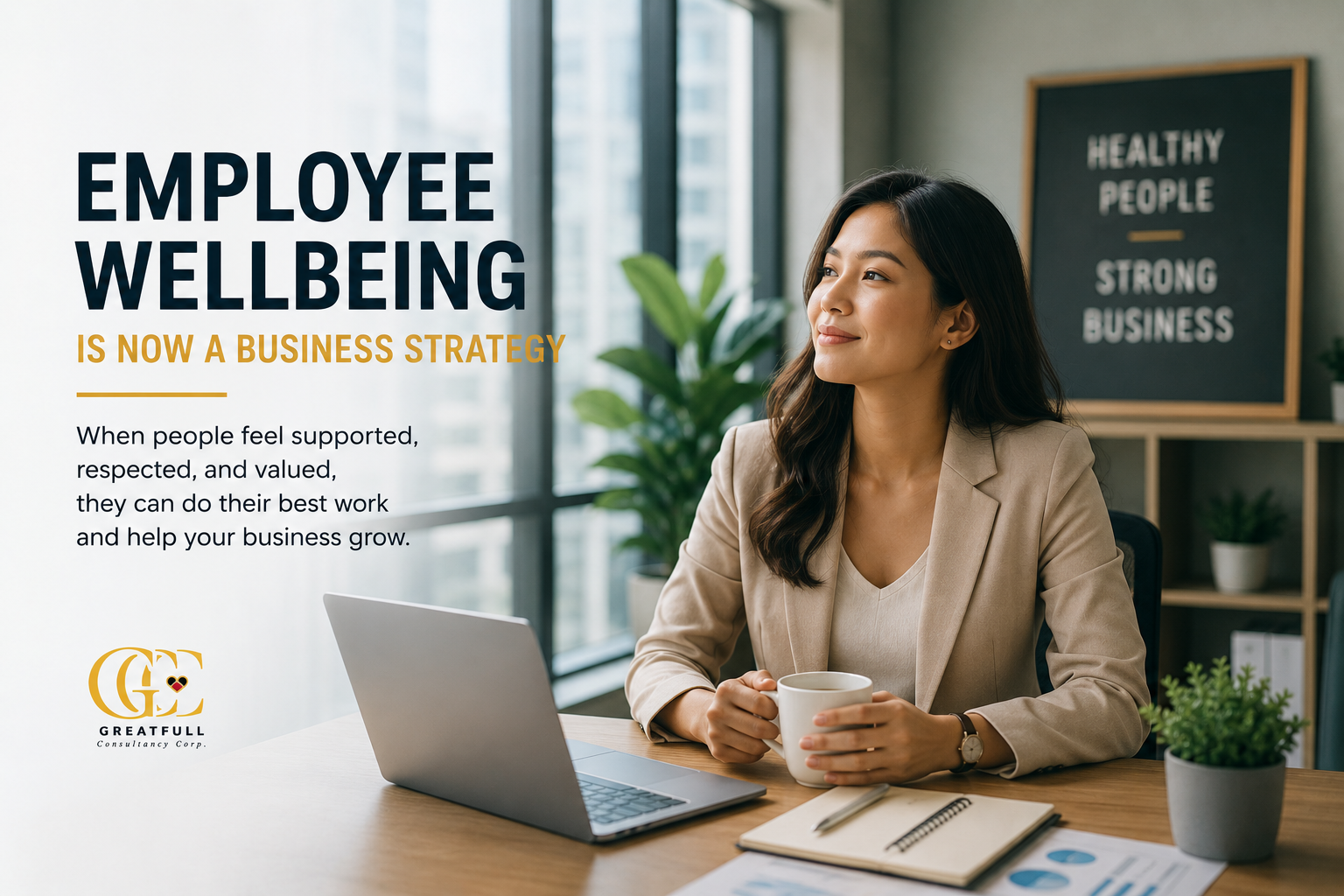
When Good Employees Start Leaving Quietly
For years, many companies celebrated the employee who could endure anything.
The one who never complained.
The one who always said yes.
The one who stayed late.
The one who absorbed everyone else’s pressure.
On paper, this employee looked reliable.
But inside, that same employee may have been exhausted, resentful, anxious, or already planning to leave.
This is where companies need to rethink what they call “commitment.”
Because high tolerance is not the same as healthy performance.
A person can be productive and depleted at the same time.
The New Workplace Question: Can People Sustain Their Best Work Here?
The current workplace conversation is not simply about comfort.
It is about sustainability.
Filipino employees are known for dedication, adaptability, and sacrifice. Many will stretch themselves for their families, their teams, and their responsibilities.
But the new question for Philippine companies is this:
Are we creating a workplace where people can keep performing without quietly breaking down?
This matters because wellbeing is no longer just a personal concern. It is now connected to attendance, retention, productivity, leadership trust, and long-term business growth.
When people feel constantly overwhelmed, they may still show up physically. But mentally and emotionally, they may already be withdrawing.
They attend meetings, but they contribute less.
They finish tasks, but they stop innovating.
They follow instructions, but they stop taking ownership.
They stay employed, but they stop feeling connected.
That is not sustainable performance.
That is slow depletion.
What the Numbers Are Telling Philippine Companies
AXA Philippines reported that 87% of Filipinos experienced work-related mental health issues, higher than the global average. The same report noted that many Filipino employees were contemplating stepping back from work, quitting, or changing jobs because of emotional wellbeing concerns.
This should not be treated as a “personal issue” outside the company’s concern.
A workplace can either protect people’s capacity or keep draining it.
The World Health Organization notes that decent work can support good mental health, while poor working environments can increase risks to mental health.
The International Labour Organization has also recognized a safe and healthy working environment as a fundamental principle and right at work.
For leaders, this means wellbeing is not separate from performance.
It is part of how performance is protected.
The Hidden Cost of Ignoring Wellbeing
When employee wellbeing is ignored, the damage rarely appears all at once.
It often shows up quietly.
More sick leaves.
More mistakes.
More conflict.
More resignation letters.
More employees doing only the minimum.
More managers feeling overwhelmed.
More teams losing trust in leadership.
And because Filipino employees are often polite, resilient, and careful with authority, they may not always say directly:
“I am no longer okay here.”
Instead, they may say:
“Okay lang po.”
“Kaya pa.”
“Noted po.”
“Sige po.”
But behind those words, the person may already be at capacity.
This is why leaders must learn to read more than output.
They must also read patterns.
Old Retention Logic vs. the Current Workplace Reality
| Previous Retention Strategy | Current Workplace Reality |
|---|---|
| Increase salary and expect loyalty | Pay matters, but people also look for growth, respect, flexibility, and wellbeing. |
| Give annual team building | Employees need daily psychological safety, not just occasional bonding. |
| Promote high performers into leadership | Managers need training in communication, coaching, feedback, and emotional maturity. |
| Reward those who always say yes | Sustainable performance requires boundaries and workload clarity. |
| Offer generic wellness programs | People need wellbeing practices connected to real work conditions. |
| Keep policies on paper | Employees need to feel safe enough to use the support available. |
| Focus only on output | Culture now affects execution, retention, innovation, and employer brand. |
| Replace resigning employees quickly | Companies must understand why good people no longer want to stay. |
This is where many companies are being invited to mature.
Not by becoming lenient.
But by becoming more honest about what people need to perform well over time.
Why Wellbeing Is Not the Opposite of Accountability
One concern leaders may have is this:
“If we focus too much on wellbeing, will people become less accountable?”
It is a fair question.
But real wellbeing work does not remove standards.
A healthy workplace still has goals, metrics, deadlines, and expectations. People still need to perform. Teams still need to deliver. Leaders still need to make difficult decisions.
The difference is this:
A healthy workplace does not use fear, guilt, confusion, or exhaustion as the main fuel for performance.
It creates the conditions where people can do strong work without losing themselves in the process.
That means:
- Clear expectations
- Better communication
- More realistic workload planning
- Respectful correction
- Healthier team rhythms
- Manager maturity
- Psychological safety
- Growth conversations
- Honest feedback loops
When these are present, accountability becomes easier to sustain because people know what is expected, where they stand, and how they can grow.
How Leaders Can Make Wellbeing Practical
Wellbeing does not have to begin with a large program.
It can begin with practical leadership habits.
1. Review the workload honestly
Ask whether your people are truly underperforming, or whether the system is overloaded.
Some teams are not lazy.
They are simply operating with unclear priorities, unrealistic timelines, and too many urgent tasks.
2. Train managers to notice early signs of strain
Managers do not need to become therapists.
But they do need to become more observant leaders.
They should know when a high-performing employee suddenly becomes withdrawn, irritable, unusually quiet, or less engaged.
These are not always attitude problems.
Sometimes, they are signals.
3. Normalize respectful check-ins
A simple check-in can prevent deeper disengagement.
Not the rushed kind that asks, “Okay ka lang?” while already walking away.
But the kind that makes space for honest conversation.
Try asking:
“What has been heavy for you lately?”
“What support would make your work more manageable?”
“Are there priorities we need to clarify?”
“What is one thing we can improve as a team?”
4. Connect wellness programs to real work conditions
A webinar on stress management can help.
But if employees return to the same overloaded system, the effect will be limited.
Wellbeing must be connected to workload, leadership behavior, communication, role clarity, and team culture.
5. Make growth part of wellbeing
People also become depleted when they feel stuck.
Wellbeing is not only rest.
It is also the feeling that one’s work has meaning, direction, and room for growth.
When people see a future in the company, they are more likely to stay engaged.
Why This Matters for Employee Engagement
Employee engagement should not be reduced to fun events, raffle prizes, or occasional team-building activities.
Those can create moments of connection.
But they do not automatically create trust.
Real engagement happens when people feel:
- Seen
- Heard
- Respected
- Supported
- Challenged in healthy ways
- Connected to the company’s direction
- Able to contribute meaningfully
This is especially important for organizations that want to improve employee engagement Philippines in a deeper and more sustainable way.
The goal is not only to make people enjoy work.
The goal is to help them feel that their work matters and that they matter while doing it.
The Leadership Shift: From Endurance to Sustainability
Many Philippine workplaces have been built on endurance.
Kaya pa.
Tiis muna.
Konting sacrifice.
Push lang.
There are seasons when sacrifice is necessary. But sacrifice should not become the permanent culture.
A company cannot build long-term growth on people who are constantly running empty.
The stronger question is:
How do we help people do excellent work in a way they can sustain?
That is where wellbeing becomes a true business strategy.
Not decoration.
Not a soft benefit.
Not a once-a-year activity.
But a serious part of how a company protects its people, performance, and future.
How Greatfull Consultancy Can Help
At Greatfull Consultancy, we believe that companies do not have to choose between care and results.
A business can pursue strong performance while still honoring the humanity of the people carrying that performance.
Through our people-development work, we help organizations build healthier and more aligned teams. We support leaders in understanding what their people need not only to perform, but to grow with clarity, confidence, and purpose.
Our approach helps companies move from surface engagement to meaningful development.
From pressure to purpose.
From silent compliance to honest contribution.
From short-term output to sustainable performance.
If your organization is ready to build a healthier workplace culture where people can perform, grow, and stay well, Greatfull Consultancy can help you begin with the right conversation.
Visit greatfullconsultancy.com to explore how Greatfull Consultancy can support your people, culture, and growth.
References:
AXA Philippines. (n.d.). 87% of Filipinos report work-related mental health issues, exceeding global average. AXA Philippines.
https://www.axa.com.ph/multimedia/newsroom/87-of-filipinos-report-work-related-mental-health-issues-exceeding-global-average
International Labour Organization. (2022). A safe and healthy working environment is a fundamental principle and right at work. International Labour Organization.
https://www.ilo.org/resource/news/safe-and-healthy-working-environment-fundamental-principle-and-right-work
Sprout Solutions. (2026, January 20). The 2026 retention playbook: 15 strategies to keep your best Filipino talent. Sprout Solutions.
https://sprout.ph/articles/retention-playbook-filipino-talent/
World Health Organization. (2024). Mental health at work. World Health Organization.
https://www.who.int/news-room/fact-sheets/detail/mental-health-at-work
Leave a Reply